
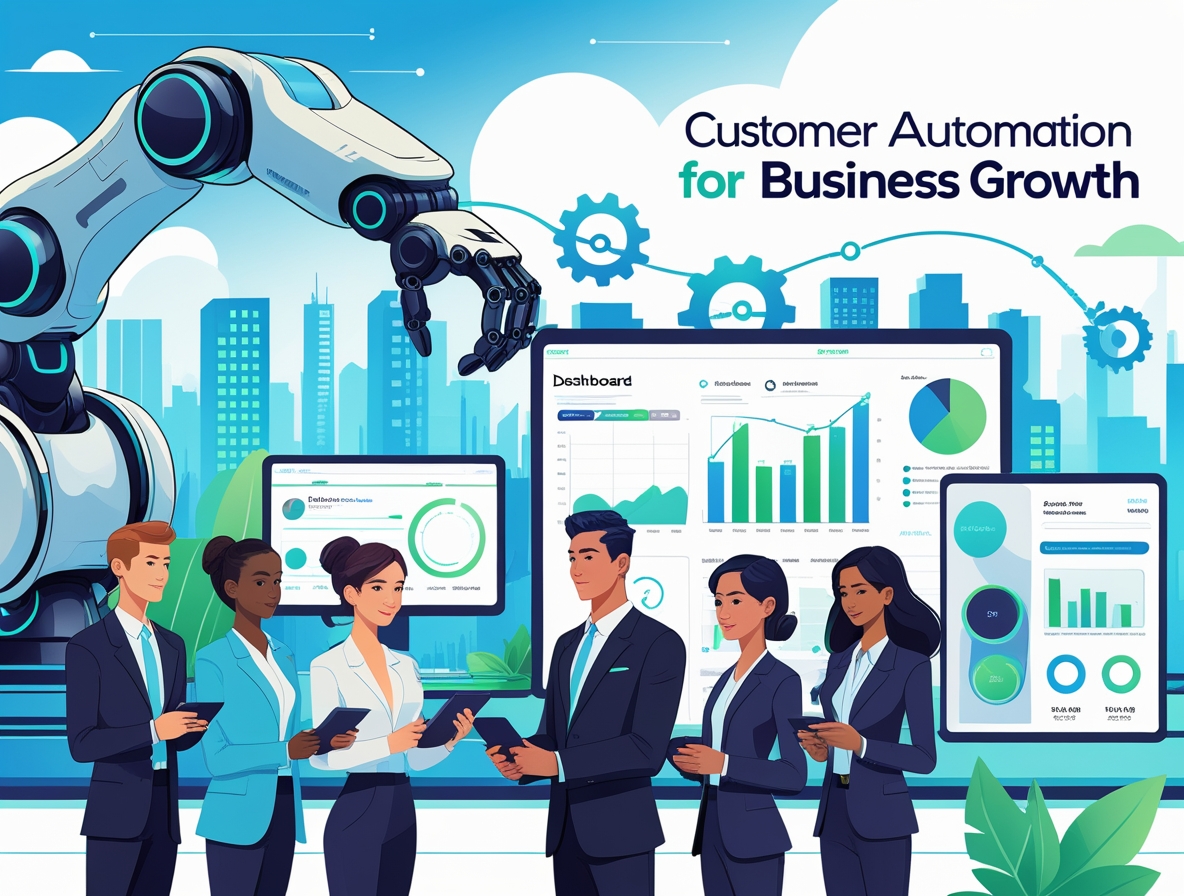
customer automation: The Key to Smarter Business Growth
Client prospects have evolved fleetly over the last decade. People now demand quick responses, individualized support, and flawless guests at every stage of their trip. Businesses that fail to meet these prospects risk losing client trust, fidelity, and profit. This is where client robotization comes in—a smart approach that allows companies to manage client relations efficiently without compromising quality.
Customer Automation refers to the use of technology to streamline, manage, and optimize client relations. From automated responses to individualized recommendations, businesses influence software, AI, and analytics to enhance service and engagement. Enforced rightly, client robotization not only improves effectiveness but also creates a more satisfying experience for guests.
Understanding customer automation
At its core, customer automation uses software tools to handle repetitious tasks in client service, marketing, and deals. This includes tasks like responding to common questions, transferring follow-up emails, recommending products, and gathering feedback. Robotization doesn’t replace mortal workers but empowers them to concentrate on advanced-value tasks, such as working on complex problems and erecting stronger connections.
Some common customer automation tools include
- Chatbots—AI-powered virtual sidekicks that can answer constantly asked questions and accompany guests through processes.
- Dispatch robotization—substantiated emails transferred grounded on client gesture, similar to welcome dispatches, monuments, and product recommendations.
- CRM robotization—client relationship operation systems that track client relations and suggest coming ways to ameliorate engagement.
- Workflow robotization—tools that automatically assign tasks to brigades, track progress, and notify applicable staff to reduce homemade work.
Using these tools allows businesses to maintain 24/7 support, increase response speed, and reduce mortal error.
Benefits of customer automation
Customer automation offers several palpable benefits to businesses of all sizes. Here’s a near look:
- better response time
A major advantage of automation is speed. Guests anticipate quick answers. and delayed responses can lead to frustration or lost deals. Automated converse systems and dispatch responses ensure that queries are addressed incontinently, indeed outside of working hours. - harmonious client experience
Thickness is critical for erecting trust. Automated systems ensure that every client receives the same position of service and messaging. This thickness strengthens brand credibility and reinforces client confidence. - Reduced functional costs
By handling repetitious tasks automatically, businesses can optimize pool allocation and reduce labor costs. Client robotization allows workers to concentrate on complex issues, making operations more effective. - Data-driven perceptivity
Automation tools collect data from all commerce. This data provides perceptivity into client gestures, preferences, and pain points. Businesses can use this information to ameliorate products, services, and marketing strategies. - substantiated guests
Ultramodern automation platforms enable personalization at scale. By assaying client data, businesses can deliver customized recommendations, offers, and dispatches, which increase engagement and fidelity.
Case Studies in Customer Automation
Several businesses have successfully enforced client robotization to boost performance and satisfaction. Then there are many exemplifications:
Case Study 1: E-Commerce Success
A mid-sized e-commerce brand faced challenges with high volumes of client queries about orders, returns, and shipping. They enforced an AI-driven chatbot to handle these questions. The result: 70 percent of common queries were resolved without mortal intervention. The company reported a 30 percent increase in client satisfaction and a 20 percent reduction in support costs.
Case Study 2: SaaS effectiveness
A software-as-a-service company was floundering with onboarding new guests. By automating follow-up emails and tutorials grounded on student conduct, they increased onboarding completion rates by 40 percent. Guests felt guided and supported, while the support platoon could concentrate on further complex specialized issues.
Case Study 3: Retail Personalization
A retail chain used CRM automation to track client purchase history and engagement. By transferring substantiated elevations grounded on buying gestures, they achieved a 25 percent increase in reprise purchases. Guests appreciated the applicability of the offers, which strengthened fidelity.
enforcing customer automation effectively
While customer automation brings benefits, indecorous perpetration can boomerang. Then there are stylish practices for successful relinquishment:
- Identify automation openings
Not every task should be automated. Start by assaying client relations to find repetitious or low-value tasks. These could include constantly asked questions, order shadowing, or appointment monuments. - Choose the Right Tools
Opting for suitable automation tools is critical. estimate software grounded on features, scalability, and integration capabilities. Ultramodern platforms should integrate with your CRM, dispatch system, and analytics tools for a flawless experience. - Maintain a mortal touch
Automation shouldn’t exclude mortal commerce entirely. Complex issues, complaints, or high-value accounts bear individualized attention. A cold-blooded approach ensures effectiveness while keeping empathy at the center of client care. - Examine and Optimize
Automation systems must be continuously covered. dissect criteria similar to response time, resolution rate, client satisfaction, and engagement. Regularly update automated workflows and dispatches grounded on performance data. - Train your platoon
Workers must understand how automation works and how to round it. Training ensures that staff can step in when necessary and use robotization tools effectively.
SEO and Customer Automation
From an SEO perspective, customer Automation also plays a part in website performance and content strategy. For illustration, automating client queries through chatbots reduces BRIO rates by helping callers find answers snappily. Likewise, gathering perceptivity from automated relations can guide content creation by pressing constantly searched questions and motifs.
High-researchable, low-competition keywords related to client robotization include:
- AI client support software
- Automated client experience
- client service effectiveness
- CRM robotization tools
- individualized client communication
Using these keywords naturally in blogs, case studies, and attendants can ameliorate visibility while maintaining professionalism.
Challenges and results
While the advantages are clear, client robotization also comes with challenges:
- Challenge 1: Over-Automation
Too much automation can make guests feel unvalued or frustrated. result balance automated and mortal relations, especially for sensitive issues. - Challenge 2: Integration Complexity
Businesses may struggle to integrate automation with being systems. Result: Choose platforms with strong integration capabilities and invest in professional support if demanded. - Challenge 3: Data sequestration
Collecting and assaying client data raises sequestration enterprises. result in misbehavior with original regulations and easily communicate data operation programs to guests. - Challenge 4: Maintaining Personalization
Automation can feel impersonal if not handled rightly. result uses segmentation, behavioral shadowing, and dynamic messaging to retain a particular touch.
The Future of Customer Automation
Customer Automation continues to evolve with advances in artificial intelligence, machine literacy, and prophetic analytics. Arising trends include:
- Prophetic client service systems anticipate client requirements before they arise.
- Voice and Conversational AI—Voice-enabled sidekicks give hands-free support.
- Omnichannel automation—guests admit to flawless service across multiple channels, including social media, Converse, and dispatch.
- AI-powered perceptivity—automation tools give deeper analytics to guide strategic opinions.
Businesses that borrow these inventions beforehand will be more disposed to deliver exceptional client services and outperform challengers.
Conclusion
Customer Automation is no longer voluntary; it’s a necessity for ultramodern businesses seeking effectiveness, growth, and client satisfaction. By automating repetitious tasks, bodying relations, and using data perceptivity, companies can save time, reduce costs, and give a superior client experience.
Enforcing automation requires careful planning, the right tools, and nonstop monitoring. When done rightly, it empowers workers, strengthens client connections, and drives measurable results. Businesses that embrace client robotization won’t only meet client prospects but exceed them, paving the way for sustainable success.
Customer automation is a smart investment for any business that values growth, effectiveness, and client fidelity. By integrating technology, data, and mortal moxie, companies can produce a terrain where guests feel supported, understood, and valued at every step of their trip.